……Next Frontier for the Akwa Ibom State, when Cleanliness Meets Innovation.
By Prince Ukpong Idiong Jr.
In every age, the definition of development changes. What was considered development in the 1980s is no longer development today. Modern day development is no longer measured by how many roads are built alone, but by how sustainable, how circular and how intelligent a city manages its own challenges.
One of the biggest challenges of any growing metropolis is waste. Uyo, Eket, Ikot Ekpene, Oron and the entire Akwa Ibom metropolis is growing rapidly. Population is increasing, markets are expanding, consumption is rising. And with that comes one inevitable reality: more waste.
The central question this editorial raises is simple but profound: Should Akwa Ibom continue to just pack waste and dump it, or should it begin to power its development with it?
This is where the concept of Waste-to-Energy becomes not just relevant, but urgent.
Before we talk about the future, we must sincerely commend the present.
Akwa Ibom State has over the years distinguished itself as one of the cleanest states in Nigeria. This did not happen by accident. It is the result of deliberate policy, consistent enforcement and civic responsibility.
The Ministry of Environment and Mineral Resources, Akwa Ibom State, deserves special commendation. In a country where environmental ministries are often the least visible, the Akwa Ibom Ministry of Environment has been visible, active and effective. From daily street sweeping, to desilting of gutters, to evacuation of refuse and beautification, the Ministry has kept faith with its mandate.
This progress has been further deepened under the administration of His Excellency, Pastor Umo Eno. Through his ARISE Agenda, environmental sustainability has been given a place of pride. The most remarkable step is the restoration of seriousness to the monthly environmental sanitation exercise. Every last Saturday of the month, movement is restricted, citizens clean their environment, and government agencies supervise compliance. It has brought back a culture of collective responsibility that many states have lost.
The result is visible for all to see. Go to Ibom Plaza today, the very heart of Uyo, the center that never sleeps. A few years ago, the story was different. Today, Ibom Plaza is clean, organized and aesthetically pleasing. The drains are free, the walkways are clean, the environment is welcoming. If you can keep Ibom Plaza clean, you can keep any part of the state clean. That is a testament to good governance.
But we must now ask: What next after cleanliness?
For decades, Nigeria has practiced what environmentalists call the Linear Waste Model: Bring in goods, consume them, throw away the waste, carry it to a dumpsite and forget it.
This model has three major problems.
First, it is financially draining. Government spends billions every year on diesel for trucks, payment for cleaners, maintenance of dumpsites without any economic return.
Second, it is environmentally dangerous. Our major dumpsites, including the Uyo Village Road landfill, emit methane, a greenhouse gas 80 times more dangerous than carbon dioxide. When waste rots, it pollutes underground water and the air.
Third, it is wasteful in the truest sense. What we call waste is actually 60% organic materials, 15% plastics, 10% paper and other combustible materials. All of these are raw materials for energy.
A state that is striving for modern development cannot afford to bury wealth in the ground in the name of waste disposal.
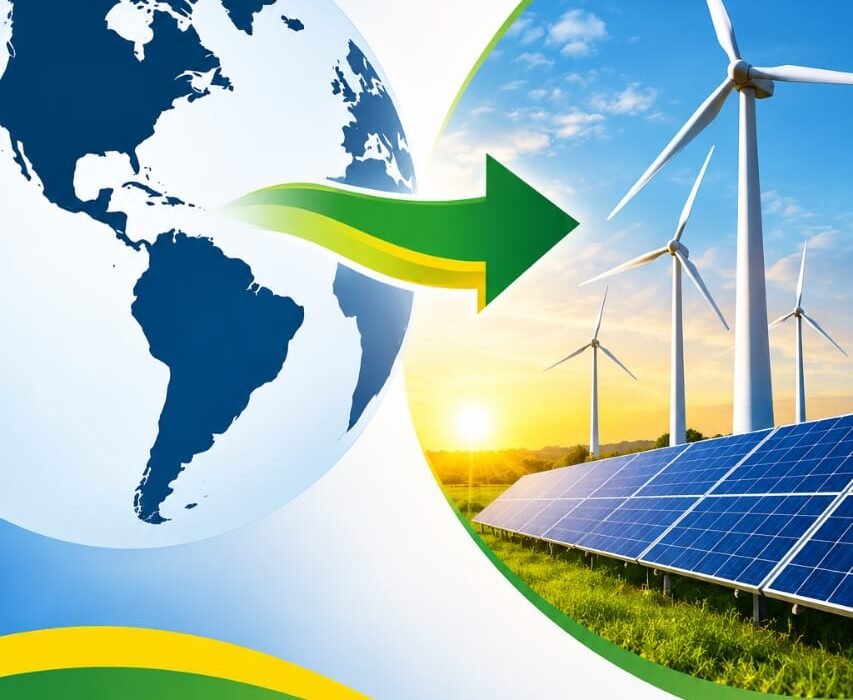
Waste-to-Energy, commonly called WtE, is a globally accepted approach where waste is converted into usable forms of energy such as electricity, heat, biogas and even fuel.
It is not open burning. It is not crude incineration. It is a scientifically controlled, environmentally safe technology used by the most advanced cities in the world.
In Sweden, less than 1% of waste goes to landfill; the rest is converted to energy that powers homes. In Singapore, five Waste-to-Energy plants generate up to 3% of the nation’s electricity. In Rwanda, Kigali’s waste is generating biogas for households. In Lagos, the State is already piloting waste-to-energy from its Olusosun dumpsite.
The technologies are varied and adaptable.
Anaerobic Digestion is perfect for Akwa Ibom’s market waste. Decaying plantain, vegetables, and food waste from markets like Itam, Akpan Andem, and Mkpat Enin can produce biogas that can power homes and markets.
Incineration with Energy Recovery can use non-recyclable plastics and papers to generate electricity for street lighting and public facilities.
Landfill Gas Recovery can capture methane already being emitted from our existing dumpsites and turn it into electricity.
Pyrolysis can convert plastics into diesel and industrial fuel.
This is the modern day development approach: Nothing is wasted.
Akwa Ibom is perhaps the most prepared state in the South-South for this transition for four strategic reasons.
One, we already have the culture of cleanliness. Waste-to-Energy fails where there is no collection system. Akwa Ibom already has one. The Ministry of Environment has built an effective collection system. What we need now is to add a sorting and conversion system to it.
Two, the volume and type of waste we generate is ideal. As a largely agrarian and consumptive state, our waste is predominantly organic and highly combustible, which is best for biogas and energy recovery.
Three, we have an energy need that this can solve. Despite being an oil-producing state, many communities still struggle with stable power. A 5 to 10 megawatt Waste-to-Energy plant in Uyo metropolis alone can power all public streetlights, power Ibom Plaza at night, power the State Secretariat and even feed into the Ibom Power Plant grid.
Four, it aligns perfectly with Governor Umo Eno’s ARISE Agenda. Waste-to-Energy promotes Agricultural revolution through organic fertilizer from biogas plants, it promotes Rural development through decentralized energy, it promotes Industrialization through availability of cheap energy, and it promotes Environmental Sustainability which is at the core of the Agenda.
Personally, I want to commend the head of environmental unit of the state, Hon.Prince Ikim for doing a good job.
With his approach, its getting better everyday.
Beyond the environmental argument, there is a powerful economic argument.
A functional Waste-to-Energy system creates a complete value chain. It creates jobs for young people who will be employed as waste sorters, waste aggregators, plant operators, technicians and engineers. It creates business for private sector investors who will invest in recycling and energy.
It reduces the cost of governance. Instead of spending money to dump waste, government begins to earn from waste through electricity sales, carbon credits and organic fertilizer sales.
It will boost tourism and investment. A state that is not only clean but also powers itself from its waste tells a compelling story to the world. It positions Akwa Ibom as a smart, green and forward-thinking state.
Imagine a branded narrative: “Visit Akwa Ibom, where even our waste powers our future.” That is modern development.
This editorial does not just propose an idea; it proposes a workable path.
We recommend a three-stage implementation approach.
The first stage is Segregation at Source. The Ministry of Environment should introduce a simple two-bin policy: Green for organic, Blue for others. Start from Ibom Plaza, all Ministries, hotels and major markets. There must be massive public enlightenment using traditional and social media in Ibibio, Annang, Oron and English.
The second stage is a Pilot Project. The State Government in partnership with Akwa Ibom State University, Department of Mechanical and Chemical Engineering, should establish a 1 Megawatt pilot biogas plant using market waste from Uyo. This will serve as a proof of concept and a training center.
The third stage is Large Scale Investment through Public-Private Partnership. Invite credible green energy investors to build a full-scale Waste-to-Energy Plant. Government provides land and guaranteed waste supply, investor provides technology and capital, and both share the energy and revenue.
In Conclusion,
let the record be clear: The Ministry of Environment has done very well. Governor Umo Eno’s administration has restored discipline through monthly sanitation. Ibom Plaza is clean and Uyo is shining. These are facts that must be celebrated.
But celebration must not lead to complacency. The cleanest state badge is good, but the smartest state badge is better. The world is moving from cleaning waste to converting waste.
Akwa Ibom has the cleanliness, the political will, the waste volume and the leadership to lead this new revolution in Nigeria.
It is time to move beyond packing waste to powering development. It is time to turn our trash into light, our refuse into revenue, and our sanitation exercise into a wealth creation exercise.
That is what modern day development truly means.
Prince Ukpong Idiong Jr.
Is a Public Affairs
Analyst, based in Abuja -Nigeria.