 EXCLUSIVE INTERVIEW
There’s Strong Collaboration Now With Akwa Ibom Government For More Development – NDDC Commissioner
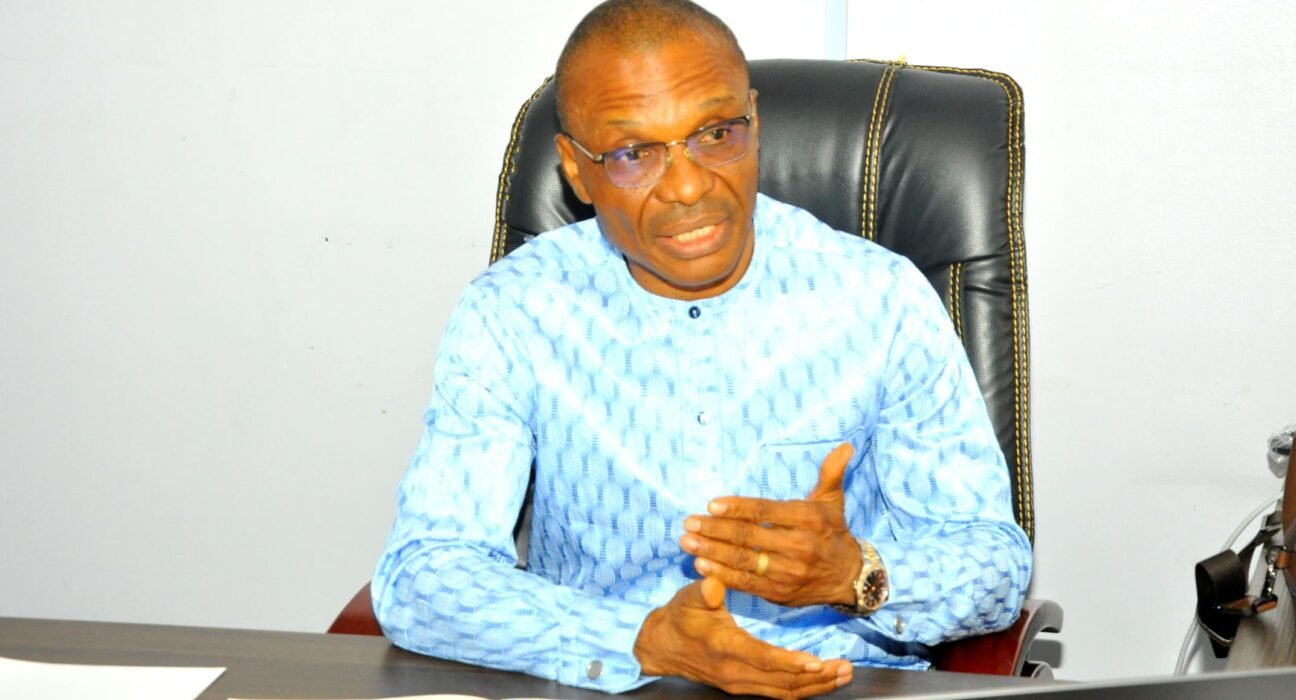
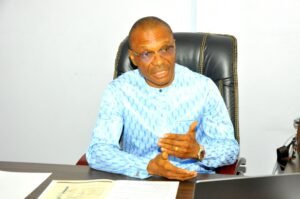
Apostle Abasiandikan Nkono, Akwa Ibom State representative on the Board of the Niger Delta Development Commission (NDDC) and former Publisher, Horizon Magazine, has declared that the era of face-off between the Akwa Ibom State Government and the Commission over the implementation and execution of development projects is over.
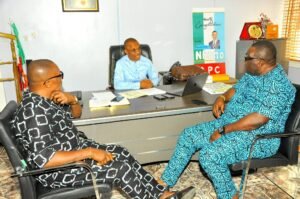 Speaking in an interview with the ARISE Standard crew, Mr Nkono said the current NDDC board was committed to strengthening cooperation with the State Government to ensure better coordination, timely execution and completion of projects for the benefit of the people.
He also highlighted the board’s efforts to address abandoned projects, expand infrastructure, improve access to healthcare and education, and create economic opportunities for youths and women across the Niger Delta.
Nkono speaks on the Commission’s efforts to complete abandoned projects, the construction of permanent state offices, scholarships, contractor payment reforms, community relations and collaboration with the Akwa Ibom State Government. He also assesses President Bola Tinubu’s administration, Governor Umo Eno’s performance and the prospects of the All Progressives Congress (APC) in the 2027 elections.
Excerpt:
ARISE STANDARD: The NDDC has faced criticism over abandoned projects and frequent changes in leadership. What is the seventh governing board doing differently to address these challenges?
NKONO: The chairman and the entire board resolved that things must be done differently. If we continue doing things the same way, we will keep getting the same results. We needed a new approach, a different set of ideas and a stronger commitment to delivering results.
 One of the decisions we took was to ensure that the NDDC has permanent offices in the nine states of the Niger Delta. How can an interventionist agency that builds schools, hospitals and other public infrastructure for communities continue to operate from rented premises in its state offices?
That decision aligns with President Bola Tinubu’s demand for results. The President is not someone who is satisfied with speeches, excuses and explanations. He expects projects to be delivered and the dividends of democracy to reach the people.
The initiative to provide permanent state offices for the Niger Delta states began from the commencement of activities by the 7th Governing Board. Many states, namely Rivers, Bayelsa, Cross River and Delta, now have their permanent offices, and Akwa Ibom is now among those expected to benefit from the initiative.
The Akwa Ibom State office project was originally awarded in 2012. Different administrations came and went, but the project remained unfinished. One of the Commission’s greatest challenges has been frequent changes in administration, which often disrupt continuity.
The original contract was eventually terminated and re-awarded to another contractor. When we visited the site, the project was about 95 per cent complete. We expect further progress and believe the permanent office will be delivered within the stipulated period. The President will be invited to commission it when it is ready.
There is much more to report about the work of this board, although not every activity undertaken by the state office is immediately publicised. The Commission has a corporate affairs directorate responsible for communicating its activities, but the absence of publicity does not mean that nothing is happening.
ARISE STANDARD: Beyond infrastructure, what other major initiatives has the NDDC introduced?
NKONO: One major initiative is Operation Light Up the Niger Delta. It has been very successful, and even the President has commented on its impact.
Some communities that were previously known for criminal activities and insecurity are experiencing improved nighttime activity following the installation of solar streetlights.
In areas where people were previously afraid to move around at night because of pickpocketing and robbery, residents can now conduct their businesses with greater confidence. In some places, traders remain open as late as 2:00 a.m.
The initiative has helped improve security and the quality of life in these communities. We regard this as one of the practical benefits of the NDDC’s intervention.
ARISE STANDARD: You have facilitated interventions in security infrastructure, including extensive solar lighting at the Akwa Ibom State Police Command headquarters in Ikot Akpan Abia. What has been the impact of this intervention?
NKONO: One of our interventions in the security sector was the installation of extensive solar lighting at the Akwa Ibom State Police Command headquarters in Ikot Akpan Abia. The project has received commendation from the Commissioner of Police, who acknowledged its positive impact on operational activities. We recognise that an effective security system requires not only personnel and logistics but also appropriate infrastructure that supports efficient operations. Our collaboration with security agencies is therefore aimed at strengthening their facilities while also ensuring the protection of NDDC projects across the state.
ARISE STANDARD: Education is another major concern in the Niger Delta. What is the Commission doing to support students?
NKONO: The foreign postgraduate scholarship scheme has been reactivated under this board. For the past three years, the Commission has sponsored about 200 scholars annually to study at universities abroad. That amounts to approximately 600 beneficiaries over the period.
We have also been encouraged by reports that many beneficiaries have distinguished themselves academically, including earning distinctions with awards in their respective fields.
Beyond foreign scholarships, the Commission introduced a local scholarship programme last year to accommodate more students of Niger Delta extraction.
Within this context, the foreign scholarship provides each beneficiary with $40,000 (this covers tuition, feeding, etc.), while the local scholarship offers ₦5 million to each beneficiary. The local scheme caters to a larger number of students, with about 600 beneficiaries annually at the last count.
These programmes are important because many of us went through considerable hardship to obtain an education. Financial support of this nature can make the difference between a student completing a programme and abandoning it.
The foreign scholarship application window for this year has, as I understand it, closed, while the local programme has commenced. Interested applicants should follow announcements from the Commission’s Education, Health and Social Services directorate for information on application dates, eligibility and the relevant portal.
I encourage young people from Akwa Ibom to take these opportunities seriously. From my own efforts, I know several beneficiaries who have travelled to the United Kingdom through the scholarship programme, and they have performed exceptionally well.
ARISE STANDARD: What is the NDDC doing to address the problem of abandoned roads, bridges and other infrastructure projects across the Niger Delta?
NKONO: One of the central mandates of the seventh governing board is to reduce the number of uncompleted projects and bring abandoned projects back to life.
We are not interested in continuing a situation in which projects remain on paper for years without being delivered. Across the Niger Delta, several abandoned roads, bridges and buildings are being revisited, with emphasis on completing projects that can still serve their intended purposes.
Take the major bridge project, the Kaa-Ataba bridge in Rivers State (it is 1.2km long), that has been named after President Tinubu. At the last assessment I recall, it was about 97 per cent complete. It is a major project, and its progress demonstrates what sustained monitoring and a commitment to completion can achieve.
Another important achievement is the effort to restore confidence in the Commission. In the past, some contractors struggled to obtain payment for completed work, and NDDC contract awards did not always command confidence within the financial industry. Today, we are working to change that perception.
Our state office brought contractors together to collate information on past and current projects. We examined who handled each project, the contract sum, the level of execution and the point at which work stopped. We then forwarded the information to the Executive Director of Projects to help management determine the appropriate next steps.
We did this because contractors should not have to travel repeatedly to Port Harcourt to pursue payment for work they have completed without getting a clear resolution.
The Commission has also introduced a sequencing approach to contractor payments. Sometimes, the funds available at a particular time are insufficient to settle every outstanding obligation simultaneously. In such circumstances, payments are organised in batches rather than promising everyone immediate payment when the money is not available.
For example, if 500 contractors are awaiting payment, the Commission may process them in batches of 100 as funds become available. The objective is to make payments more orderly and predictable.
These measures are beginning to yield results, and some contractors have expressed appreciation after receiving payments.
ARISE STANDARD: The NDDC has also been associated with health interventions. What is happening in this area?
NKONO: Health is another area the Commission is taking seriously. In Rivers State, a modern specialist/cardiovascular hospital has reached an advanced stage, and we expect it to be commissioned. The facility is intended to provide specialised services, including kidney transplantation.
Health facilities are also being constructed in other parts of the Niger Delta, while free medical outreaches are being organised to bring healthcare closer to communities.
In Akwa Ibom, we have done two medical outreaches so far, and we are working towards implementing the third. Similar programmes have been conducted in other communities across the region.
These outreaches are designed to provide comprehensive services. People living with hernias, eye problems and other health challenges can receive medical attention without paying for treatment. Where appropriate, patients who need corrective glasses can receive them, alongside guidance on their proper use and replacement.
The programmes also create awareness about health conditions that people might otherwise neglect because of cost or lack of access to medical facilities.
ARISE STANDARD: What specific programmes has the NDDC implemented to support women?
NKONO: Recently, the Commission organised a programme exclusively for women. It was successful, and I understand that each beneficiary received ₦500,000.
The beneficiaries were paid before leaving the venue, and we subsequently received calls expressing appreciation.
Some participants also qualified for a subsequent phase of the programme in Rivers State. This demonstrates that the initiative is not merely about distributing money; it can also create opportunities for further participation and development.
We have explored a strategic partnership with the Office of the Akwa Ibom First Lady and the Golden Initiative For All, GIFA, with the aim of expanding interventions for vulnerable residents.
Such collaboration provides an opportunity to explore ways of reaching people who require additional support and of complementing existing welfare interventions. We have also participated in high-level NDDC engagements with private-sector stakeholders, including Ibom Air, as part of broader efforts to explore partnerships that can contribute to development in the Niger Delta.
Our approach is to recognize the value of collaboration among public institutions, private-sector organizations and other stakeholders in addressing development challenges.
The NDDC has implemented women-focused programmes on other occasions. Women need to be deliberately included in empowerment initiatives so that they can improve their economic circumstances and contribute more effectively to their families and communities.
ARISE STANDARD: Relations between the NDDC and some Niger Delta state governments have historically been strained. What has changed, particularly in Akwa Ibom?
NKONO: In my view, the conflicts were unnecessary. Government remains government, whether at the federal, state or local level. I have served as a vice-chairman of my local government and as a supervisor in the Works, Agriculture and Education departments. Those experiences taught me the importance of understanding institutional responsibilities and working within them.
The NDDC is an interventionist agency, but it operates in states that have elected governments. The most effective way to achieve results is through collaboration, not confrontation.
You cannot enter a state, disregard its government and insist on imposing your own approach. Even when your intentions are good, the manner in which you pursue them matters.
Every institution must understand its responsibilities and respect the authority of others. When people recognise one another’s roles, give honour where it is due and approach one another with mutual respect, cooperation becomes easier.
That is the approach we have adopted. We recognise the state government’s position, respect its leadership and understand that the ultimate objective is the same: improving the lives of the people.
ARISE STANDARD: What concrete examples of collaboration between the NDDC and the Akwa Ibom State Government can you point to?
NKONO: Sports and culture provide a clear example. The Niger Delta Sports Festival hosted in Akwa Ibom last year was an important demonstration of collaboration between the state government and the NDDC.
There are also other areas of cooperation, including roads, bridges, health and development planning, although not every intervention attracts public attention.
Another important change concerns the preparation of the NDDC budget. In the past, the Commission could prepare its budget without sufficiently involving the people and institutions affected by its projects. That approach is changing.
The Commission now engages stakeholders, including state governments, development partners, traditional rulers, youths and women, before drawing up its budget. These consultations help us identify actual needs and determine which projects should receive priority.
Development should be driven by needs assessment, not by the arbitrary distribution of projects.
For example, a community may already have enough boreholes but lack a functional health centre. If you build another borehole without consulting the people, you may spend public money without addressing their most pressing need. Proper consultation helps us avoid such mistakes.
ARISE STANDARD: Youth restiveness and demands for money from contractors have contributed to the abandonment of some NDDC projects. Has the board found a way to address the problem, and is there hope for projects that contractors have deserted?
NKONO: Projects are abandoned for several reasons. Youth restiveness is one, but the capacity of the contractor is another major factor.
Sometimes, contractors take on projects beyond their financial or technical capacity. Others enter communities without making the effort to understand the people, consult their leaders or negotiate acceptable terms for carrying out the work.
My experience is that diplomacy is essential. You cannot enter somebody’s community and behave as though you own the place. You must engage the traditional ruler, youth leader, women’s representatives and other relevant stakeholders.
Explain what you want to do, make them understand how the project will benefit them (including the fact that the project is theirs for keeps) and listen to their concerns. Sometimes, a flexible and respectful approach will achieve more than confrontation.
This does not mean that contractors should accept unreasonable demands or compromise the quality of their work. Rather, it means that community engagement must be taken seriously from the beginning.
There are also contractors who hire equipment without properly checking its condition. When the equipment breaks down, work stops, costs rise and the contractor begins to struggle financially. Eventually, the contractor may abandon the site.
These are some of the factors that affect project execution.
The board is addressing the problem by assessing contractors’ capacity and taking action where they cannot justify their continued involvement in a project. Where necessary, contracts are terminated and re-awarded to more competent contractors.
That is what happened with the NDDC’s Akwa Ibom state office. The original contract did not deliver the desired result, so it was terminated and re-awarded. The progress we have seen since then illustrates why such decisions are sometimes necessary.
The same principle applies elsewhere. If a contractor receives mobilisation funds (as the policy then was), the Commission expects to see corresponding progress on the site. Contractors cannot continually demand additional funds while the project remains largely untouched.
Where a contractor fails to perform, the Commission takes pragmatic steps to address it. Questions concerning the recovery of funds already disbursed are handled through appropriate legal and administrative processes.
ARISE STANDARD: How can young people access the NDDC’s foreign scholarships, local scholarships and vocational training opportunities?
NKONO: The most direct route is to follow the Commission’s official announcements and application portal. These programmes have application windows, and interested applicants need to monitor them closely.
The Commission advertises its scholarship opportunities annually. Young people are often more conversant with digital platforms than older people, so they should use that advantage to stay informed.
My advice is that they should take their future seriously and avoid misplaced priorities. They should not wait until an application window closes before asking how to apply.
There is also a need to rethink the attitude that certain kinds of legitimate work are beneath a university graduate. Starting a small business does not diminish the value of a degree. Education should help people approach opportunities differently, improve the quality of their work and build sustainable enterprises.
Young people should be willing to start small, develop their skills and grow steadily. They should also take advantage of the scholarships, training programmes and other opportunities available to them.
ARISE STANDARD: What progress have you made in road infrastructure and other community development projects across Akwa Ibom?
NKONO: We have secured approval for internal road projects in Eket Local Government Area, with work ongoing on the 21-kilometre Okossi–Mfokpo–Eyokan–Ubodung–Erebi Road. The road, which includes bridges, is expected to connect more than 30 communities across three local government areas. These interventions are intended to improve connectivity, facilitate transportation and enhance economic activities in the benefiting communities.
Other approved projects include a pavilion for Akwa Ibom State University, a community hall at Midim in Abak Local Government Area, teachers’ quarters at the Federal Polytechnic in Essien Udim Local Government Area, and quarters for members of the National Youth Service Corps in Uyo Local Government Area.
We believe that infrastructure development must respond to the practical needs of communities and institutions. These projects are part of our efforts to promote improved access, support educational institutions and provide facilities that serve the public.
We have secured interventions for Eket that include a power station, an ICT centre, road projects, solar lighting and scholarship opportunities. Our approach is to support development across different sectors because communities require both physical infrastructure and investments in human capital.
Roads and electricity support commerce and everyday activities, while ICT facilities and scholarships create opportunities for learning and personal development. We will continue to pursue interventions that respond to identified needs in Eket and other parts of Akwa Ibom State.
ARISE STANDARD: Could you talk about the interventions you have pursued to address youth unemployment and promote entrepreneurship?
NKONO: More than 10,000 youths across the Niger Delta were trained in vocational skills under a programme that provided a monthly stipend of ₦50,000 for 12 months and starter packs upon completion.
I also flagged off a six-week CNG autogas conversion training programme for 400 youths to prepare them for opportunities in the alternative-fuel sector. Additionally, through collaboration with NDCCITMA, we have supported training for aspiring entrepreneurs and small and medium-sized enterprises.
ARISE STANDARD: What support has been provided to vulnerable groups and communities facing health and social challenges?
NKONO: I represented the NDDC in donating wheelchairs, crutches, walking frames, hearing aids and braille books to persons with disabilities in Akwa Ibom.
Other interventions include free medical outreaches, anti-malaria campaigns and anti-drug abuse sensitisation programmes. In 2024, relief materials were also donated to flood victims across the state. We have equally supported grassroots sports as a means of developing young talent and reducing social restiveness.
ARISE STANDARD: What would you identify as the defining difference between the seventh governing board and previous NDDC administrations?
NKONO: The difference is our willingness to confront the problem of abandoned projects with practical solutions.
For too long, people talked about abandoned projects without adequately addressing why they remained abandoned. We decided that if a contractor could not justify continued involvement in a project, the Commission would take the necessary steps to terminate the contract and re-award it to someone with the capacity to deliver.
Where a contractor had not received mobilisation (as the policy was, because NDDC no longer mobilizes contractors), the circumstances would be considered in determining the appropriate response. Where funds had already been released, the Commission would pursue the necessary legal processes to establish accountability and recover funds where appropriate.
We also strengthened project monitoring. It is not enough for officials to sit in an office, receive presentations and listen to contractors explain their progress. Management must visit project sites and verify what is happening.
The Managing Director has personally visited project sites repeatedly, and members of the board and state offices have also conducted inspections.
The permanent office project in Akwa Ibom is an example. We continue to monitor it because we have a delivery timeline.
When contractors know that the Commission will inspect their work regularly and will not tolerate persistent failure, they have a stronger incentive to perform.
That combination of accountability, monitoring, appropriate contract termination and a renewed focus on completion is central to what this board is doing differently.
ARISE STANDARD: Finally, before delving into politics, how do these interventions reflect your priorities as the commissioner representing Akwa Ibom State?
NKONO: Our focus is on interventions that address practical needs across infrastructure, education, youth empowerment, healthcare, social welfare and security. From road projects and solar lighting to scholarships, vocational training and support for vulnerable residents, we are pursuing opportunities to improve community development and expand access to essential services across the state.
ARISE STANDARD: President Tinubu’s re-election campaign has begun to gather momentum ahead of 2027. What is your assessment of his prospects?
NKONO: The turnout at the APC presidential campaign event in Kaduna was encouraging. It demonstrated the party’s ability to mobilise supporters and suggested that the President retains significant political clout and support.
I also believe President Tinubu has introduced policies with long-term implications for Nigeria, although some of them have come with immediate economic difficulties.
Take the removal of the petrol subsidy. The policy has imposed hardship on many Nigerians, but it has also changed the revenue available to governments at different levels. Some state governments have reported increased allocations and have used additional resources to pursue development across different sectors.
The important question is whether those resources are being converted into tangible benefits for the people. Where governments invest them properly, the effects can extend beyond immediate relief to improvements in infrastructure, education, healthcare and other public services.
The student loan programme is another example. Many Nigerians struggled to finance their university education. Under the student loan scheme, eligible students can obtain financial assistance and repay their loans under the programme’s applicable terms after securing employment.
That is a different approach to expanding access to education, and it can reduce the burden on families that cannot afford university costs.
I believe some of the President’s policies are long-term investments whose full benefits may take years to emerge. Nigeria often places too much emphasis on immediate returns and too little on policies that require patience and consistent implementation.
We need to appreciate serious efforts while holding leaders accountable for results. Recognition can encourage better performance, just as constructive criticism can help address shortcomings.
The same principle applies to electricity. With changes in the power sector, states have greater opportunities to pursue their own electricity initiatives. Where supply improves, businesses, including small and medium-sized enterprises, can benefit.
For these reasons, I believe voters who assess the administration’s policies and their long-term implications will have reasons to support the President in 2027.
ARISE STANDARD: How would you assess Governor Umo Eno’s performance over the past three years under the ARISE Agenda?
NKONO: Governor Umo Eno is a leader I hold in high esteem. His administration has placed considerable emphasis on peace, inclusivity and development.
One of the things I admire is his effort to bring people together and encourage a more peaceful political environment. We cannot continue fighting over grievances inherited from previous generations without asking whether those disputes serve the interests of the people today.
Our society has changed, and many of us have acquired higher education. We should use that education to resolve differences, strengthen relationships and promote development rather than perpetuate old conflicts.
Governor Eno’s emphasis on peace and inclusivity is therefore important. It creates room for people to sit together, discuss their differences and work towards common goals.
In development, I appreciate his commitment to completing inherited projects while also initiating new ones. Completing an old project is not a weakness; it is an important responsibility of government, especially when the project serves the public interest.
His administration’s engagement in education, healthcare, infrastructure and aviation reflects an effort to advance development across different sectors. The completion of projects that had remained unfinished for years is particularly commendable.
The Tropicana entertainment and business complex is one example of an inherited project whose completion I consider significant. Such projects should not be abandoned merely because they were initiated by previous administrations.
I also commend the Governor for maintaining relationships with former leaders and recognising people who deserve respect. Political leadership should not be about forgetting those who came before you or treating every change of administration as an opportunity to start from scratch.
In my assessment, Governor Eno has made a commendable effort to promote peace and development. I believe he deserves the opportunity to continue his work, and I would encourage the electorate to assess his record on its merits.
ARISE STANDARD: As the immediate past APC leader in your local government area, how prepared is Eket for the 2027 elections?
NKONO: I served as the immediate past APC leader in my local government, and it took considerable effort to stabilise the party during a period of internal divisions.
When I became involved, there were factions within the party, and we had to work to strengthen its structure. We also tried to ensure that party materials and benefits were distributed fairly across the different political zones.
My position has always been that fairness should not depend on where a person comes from. Whether we are distributing relief materials or other benefits, every zone deserves fair consideration.
That principle has guided my political activities for a long time. I believe that once you are an Akwa Ibom person, you are my brother or sister, regardless of your local government or political background.
Following the party’s recent realignment, the local government structure is being coordinated under the local government chairman. In my area, that responsibility rests with the current leadership, and I believe they are making efforts to strengthen the party.
As far as I am concerned, the APC has support across the different political levels in my local government. We have declared our support for President Tinubu, Senator Godswill Akpabio, Governor Umo Eno and other APC candidates.
I have always believed in political consistency. I do not believe in moving from one political camp to another whenever circumstances change. I have had one principal in politics since my involvement in Akwa Ibom politics, and I have remained committed to that relationship through difficult and favourable periods.
For me, loyalty, fairness and consistency are important political values. As the 2027 elections approach, I believe the party should continue building on those principles while strengthening its structures and mobilizing voters.