. ..Educate One Child, Influence an Entire Generation.
By Prince Ukpong Idiong Jr.
When a child is unable to access quality education, the first question society should ask is not “What is wrong with the child?” but “What has gone wrong with the system around the child?”
Education is not merely a social service; it is a fundamental instrument of human capital development, social mobility and intergenerational progress. Therefore, when economic hardship prevents a child from learning, blaming the child is both unjust and intellectually misplaced. A child does not determine the economic circumstances into which he or she is born.
Across Nigeria, the rising cost of living has placed considerable pressure on households. School fees, uniforms, books, transportation, feeding and other educational necessities can become overwhelming for families already struggling to meet basic needs. The consequence is often predictable: children become the unintended casualties of household economic distress.
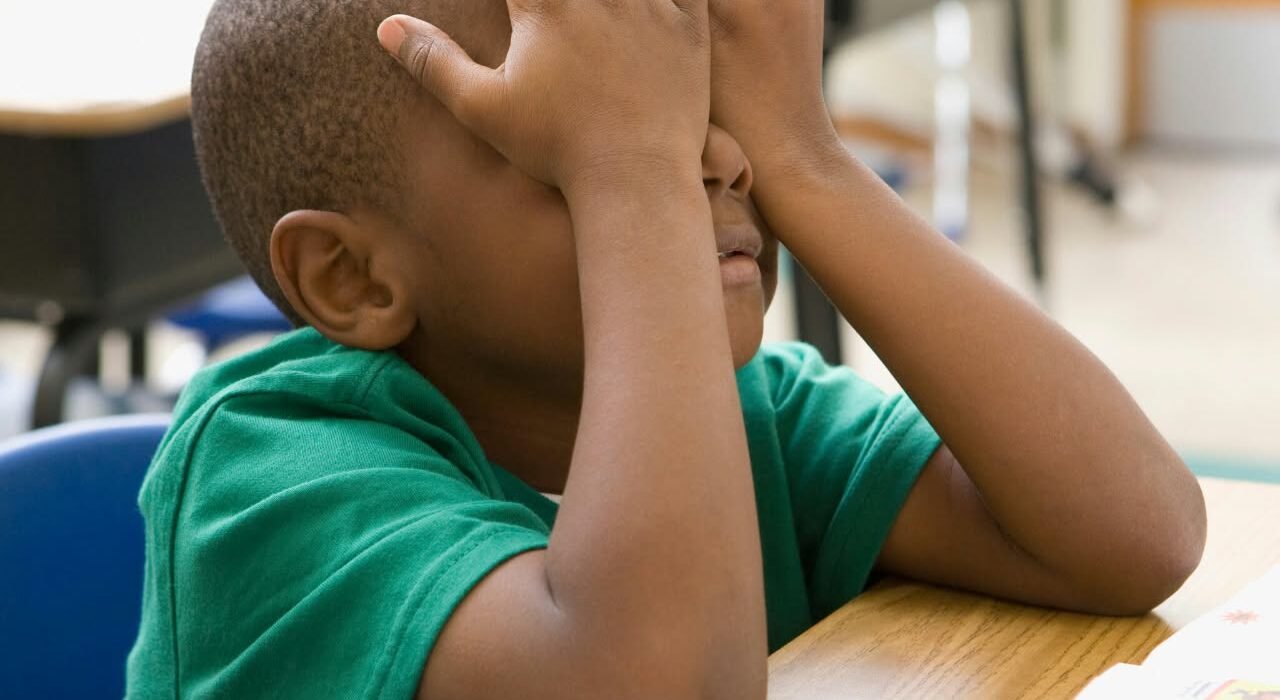
We must not blame the child for the economic woes of the family.
A child who is absent from school because the family cannot afford transportation is not irresponsible. A child who lacks textbooks because the parents cannot provide them is not less intelligent. And a child who drops out because the family can no longer sustain the financial burden has not failed society—the system has failed to adequately protect the child’s opportunity to learn.
This is why government intervention in education must go beyond declarations and policy pronouncements. Government needs to make education easier, more accessible and less financially burdensome for ordinary families.
Akwa Ibom and the Imperative for More Investment
Akwa Ibom State provides an instructive example of what targeted public investment can achieve. The Arise Renewed Hope Administration of Governor Pastor Umo Bassey Eno has undertaken the reconstruction of model primary schools, with the initiative extending to at least one model school in each Local Government Area.
That intervention is commendable because educational infrastructure directly influences the learning environment. A properly constructed school, equipped with appropriate facilities and situated within the reach of communities, can restore confidence in public education and provide children with a more conducive environment for learning.
But one model primary school per Local Government Area cannot be the destination.
It should be regarded as a foundation upon which a broader educational infrastructure programme can be built.
Akwa Ibom has 31 Local Government Areas and a large population of school-age children. The demand for quality public primary education therefore extends far beyond one flagship school in each local government. More communities require renovated classrooms, functional learning facilities, qualified teachers, instructional materials, sanitation facilities, digital learning resources and safe school environments.
The logical next step should therefore be the expansion and replication of the model-school initiative, particularly in underserved communities.
Government does not necessarily have to do everything alone. Public-private partnerships, community participation, philanthropic intervention and responsible corporate social investment can complement government funding. What matters is establishing a sustainable framework through which every child, irrespective of family income or geographical location, can have a realistic opportunity to receive quality education.
Human Capital Is the Real Infrastructure
Roads, bridges and buildings are important, but the most enduring infrastructure of any society is its human capital.
A well-educated child becomes a potential teacher, doctor, engineer, entrepreneur, civil servant, scientist, artisan, technology professional or community leader. The investment made in that child today can therefore produce benefits that extend far beyond one household.
This is why the popular principle remains compelling:
Educate a child and you influence an entire generation.
The converse is equally important. When children are systematically excluded from quality education because of poverty, society does not merely lose individual students; it gradually accumulates a deficit in skills, productivity, innovation and civic capacity.
The educational crisis must therefore be treated as an economic-development issue, not simply a school-management problem.
Do Not Make the Child Pay for Poverty
The child should never become the adjustment variable when household finances collapse.
Rather than asking poor families to carry an ever-increasing educational burden, government should examine practical mechanisms for reducing the cost of access—through stronger public schools, targeted educational assistance, learning-material support, school feeding where appropriate, transportation interventions and other evidence-based measures.
The objective should not be to create dependency. It should be to remove preventable barriers to opportunity.
Akwa Ibom has already demonstrated that government can intervene meaningfully in basic education through the model-school initiative. The challenge now is to deepen that intervention, broaden its geographical reach and ensure that the quality of education is not determined by the economic status of a child’s parents.
The question before us is ultimately simple:
What kind of generation are we preparing?
If we educate our children, we strengthen the productive capacity of tomorrow. If we abandon them to the consequences of circumstances they did not create, we merely postpone today’s economic problems until they become tomorrow’s social and economic crises.
The child is not the problem.
The child is the investment.
And if Akwa Ibom is serious about building a prosperous and competitive future, then investment in the education of its children must remain one of the highest priorities of governance.
Do not blame the child for economic hardship. Build a system that gives the child a chance to rise above it.
Prince Ukpong Idiong Jr.
A public affairs analyst based in Abuja-Nigeria.