 By UduakAbasi IKPAT
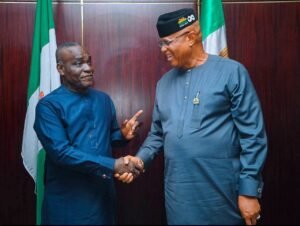
Nigeria’s Ambassador to Germany, Senator Ita Enang, has declared that Nigerians have overwhelmingly rejected calls for the reintroduction of petrol subsidy, warning that a return to the policy would reverse the economic gains recorded under President Bola Tinubu’s administration.
Enang, a former Senior Special Assistant to the President on Niger Delta Affairs and three-term federal lawmaker, made the assertion during a live television interview monitored in Abuja on Monday.
Speaking on the state of the economy and the Renewed Hope Agenda, the Ambassador said while the removal of subsidy in May 2023 came with immediate hardship, it was a necessary corrective measure to halt decades of fiscal leakage.
“Nigerians have spoken clearly. They do not want the subsidy back because we all witnessed how it became a conduit for fraud, waste, smuggling and round-tripping. What the people need now are targeted interventions and critical infrastructure, not a return to subsidy,” Enang stated.
He argued that the subsidy regime consumed trillions of naira annually with little to show, as funds meant for development were diverted to benefit a few cabals.
The Ambassador to Germany outlined what he described as the sustainable alternatives to subsidy.
He urged the Federal Government to double down on four key areas: completing the rehabilitation of local refineries to reduce import dependence, accelerating the Compressed Natural Gas, CNG, rollout for mass transit, expanding investment in renewable energy, and scaling up direct social support for vulnerable households.
“The money we are saving must be seen. Nigerians should feel it in better roads, functional hospitals, quality education and security,”_ he said.
Enang tied the subsidy savings to President Tinubu’s recent directive for the _“immediate and timely release”_ of funds to Nigeria’s Regional Development Commissions.
He said the move signals government’s commitment to ensuring that savings from subsidy removal are channeled into projects with direct impact on citizens, especially in infrastructure, job creation and human capital development.
“With the North Central Development Commission and others now being funded, we will begin to see the ‘Great Leap Forward’ blueprint come alive. That is the dividend people should expect,” he noted.
The former federal lawmaker appealed to Nigerians to be patient, stressing that structural reforms take time to yield results.
“The gains of these reforms may not be immediate, but they are designed for long-term economic stability and growth. We cannot mortgage the future of our children to keep a policy that was bleeding the treasury,” he added.
Ambassador Enang also called on government at all levels to ensure transparency and accountability in the management of subsidy savings, and urged Nigerians at home and in the diaspora to support policies aimed at repositioning the economy.
His comments come amid renewed debates on the cost of living, with labour unions and some civil society groups continuing to demand a review of fuel pricing and targeted palliatives.
The Federal Government maintains that the removal of subsidy has freed up funds for capital projects, increased allocations to states, and enabled the implementation of the new ₦70,000 minimum wage and other welfare programs.