 By Anietie John Ukpe
ARISE TV’s Morning Show programme is just that—a show. Increasingly, it appears contrived to generate controversy, and it is driven by the controversies it generates. At the centre of this theatre, stranger sometimes than fiction, sit a protagonist, Reuben Abati; an antagonist, Rufai Oseni; and an umpire, Ayo Mairo-Ese, who occasionally has to decide when the combat has gone beyond the rules of engagement.
Rufai Oseni is the programme’s gunslinger. He is the cowboy who sometimes appears to draw and shoot before sufficiently considering the consequence—or even the fairness—of the shot. There is nothing inherently wrong with aggressive journalism. Indeed, democracy needs journalists who are unafraid of powerful people. But there is a difference between being fearless and being reckless, between interrogating a guest and prosecuting him, between asking difficult questions and making oneself the story, and between interviewing someone and cross-examining someone.
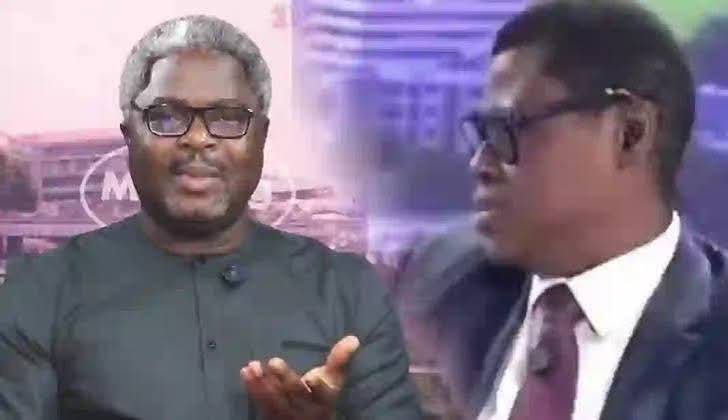
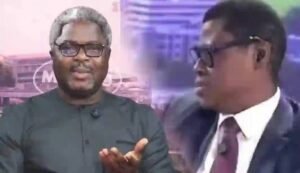
A cowboy who fires often must expect, from time to time, to draw return fire. Oseni drew his on Friday morning. His opponent was Lere Olayinka, media aide to FCT Minister Nyesom Wike, who was appearing as a guest on the programme. Oseni asked him a question concerning corruption allegations and the composition of the presidential campaign council. Olayinka refused—not merely to answer that particular question, but to answer any question from Oseni. He said he preferred the conversation to be among “reasonable human beings,” an apparent reference to his objection to an expression Oseni had previously used.
But Oseni’s question was arguably misdirected. Olayinka neither constituted the council nor, as far as the public record shows, participated in deciding its composition. On what basis, then, was he expected to account for who was included in it? A fairer line of questioning would have focused on matters within his remit as media aide to the FCT Minister, or on issues concerning the Minister and the FCT Administration on which he was competent to speak. But trust Oseni to ask a man born blind to describe the colours of the rainbow—and then press him for the difference between violet and indigo.
Anyhow, at that point, the television interview ceased to be merely an interview and became theatre. Ayo Mairo-Ese entered as umpire. She reminded Olayinka that The Morning Show had three anchors and that he had accepted an invitation to appear before all three. When Olayinka maintained that he would not take questions from Oseni, Mairo-Ese pulled the curtain on the show. The interview was over.
On the narrow question of editorial authority, ARISE was within its rights. A guest cannot ordinarily walk into a television studio and dictate which of the station’s accredited journalists may question him. If television stations surrendered that authority, guests would soon begin choosing their interviewers. That would be disastrous for journalism.
But there is another principle that deserves equal emphasis: the right to ask a question does not confer a licence to behave anyhow while asking it or ask irresponsible questions. Journalistic toughness is not measured by decibels. A raised voice is not evidence. Belligerence is not courage. Sarcasm is not investigation. And an interviewer does not become more professional merely because he causes his guest to become angry.
Indeed, the finest interviewers often ask the most devastating questions with extraordinary calm. Their weapon is not aggression but preparation. They know the facts, understand the contradictions, and construct questions from which evasion becomes obvious to the audience. They do not need to attack the guest personally; they rely on evidence.
This is where Oseni’s style has become part of the Morning Show’s attraction—and perhaps part of its enduring problem. Television naturally rewards conflict. Conflict produces clips. Clips produce social-media arguments. Arguments generate engagement. Engagement produces more viewers. That is Arise’s forte. Morning Show’s controversial bent is not an accidental by-product of journalism; it has become part of the programme’s entertainment architecture.
ARISE itself describes The Morning Show as a three-hour breakfast magazine programme providing a platform for analysis and commentary. There is nothing objectionable about vigorous commentary. But when viewers begin anticipating the next presenter-versus-guest confrontation as much as the information the interview is supposed to produce, journalism risks becoming gladiatorial entertainment in the mould of professional wrestling.
Olayinka, however, cannot escape criticism. Before accepting the interview, he should have informed ARISE of his aversion to Oseni and established the necessary guardrails. He was perfectly entitled to decline Oseni’s question; after all, a guest owns his answer just as a journalist owns his question. He could have said, “I decline to answer that question,” or challenged its premise. He could even have told Mairo-Ese, “Ayo, I have serious professional objections arising from Mr Oseni’s previous conduct, and for that reason I would prefer not to engage him. I am happy to continue answering questions from you and Dr Abati.” This would have been a moral high ground to stand on. The Australian Broadcasting Corporation’s editorial guidelines, as well as those of many other countries, for example, expressly recognise an interviewee’s freedom to decline a question while preserving the journalist’s corresponding freedom to ask it.
But his reference to wanting a discussion among “reasonable human beings” was inappropriate. It transformed what might have been a defensible moral objection to Oseni’s curious question and past conduct into an apparent personal insult. In communications, that is a strategic mistake: never allow the manner of your protest to overshadow the substance of your grievance. And that is precisely what he did. And because of that, nobody is now principally discussing the question Oseni asked. The substantive political controversy has been displaced by another controversy: Rufai versus Lere.
ARISE also had another option than terminating the interview and forgetting that millions of viewers had tuned in to watch the programme. Mairo-Ese could calmly have told Olayinka: “You are entitled not to answer Rufai’s question, but you are not entitled to determine who asks questions on this programme. Rufai has asked his question. You may answer it or decline.” Then move on.
That would have asserted ARISE’s editorial authority without terminating an interview the audience had tuned in to watch. More importantly, Oseni’s question would have remained hanging in the air, unanswered. Sometimes the unanswered question is the journalist’s most eloquent answer.
Instead, ARISE terminated the interview, effectively ignoring the interests of the viewers who had tuned in to watch it. It was rather like abandoning a football match in a sold-out stadium because the captain of one team announced that he did not like one of the assistant referees. The proper response would surely have been to remind the captain that he could not choose the match officials and then let the game continue. By blowing the final whistle instead, ARISE defended its presenter and asserted its institutional authority, but at the expense of the audience. More ironically, it completed the transformation of an interview ostensibly about politics and corruption into yet another episode of The Morning Show: Presenter Versus Guest. The referee had defended the linesman, but the spectators had paid the price.
Olayinka and Oseni have a history of public confrontation. Which raises an uncomfortable question for television producers: if you put together people with a documented history of hostility, should you be surprised when you get fireworks? Given this knowledge, good production practice would have favoured resolving that matter before going live.
The producer could have established: “Mr Olayinka, Rufai will be on the panel. Are you prepared to take questions from him?” If Olayinka said no, ARISE could simply have said: “Then unfortunately we cannot proceed with the interview.” That would have protected everyone—the guest, Oseni, the programme and, most importantly, the audience—from an avoidable on-air spectacle.
But then remember that this is a show, and it must remain a show. And in the strange economy of modern television, fireworks are not always an unintended consequence. Sometimes they may be the show – like in professional wrestling.
The tragedy is that journalism loses something whenever the interviewer becomes more memorable than the interview. A great journalist leaves the audience talking about what the guest revealed. Oseni leaves the audience talking about himself…and the guest.
ARISE was entitled to defend its editorial independence. Olayinka was entitled to refuse to answer a question. Oseni was entitled to ask a difficult one. But entitlement is the lowest threshold of professional conduct. The more important questions are whether the exchange enlightened the audience, advanced public understanding, and extracted information Nigerians needed to know. By that standard, everybody lost something on Friday morning.
Except, perhaps, the show.