 By IKPAT UduakAbasi
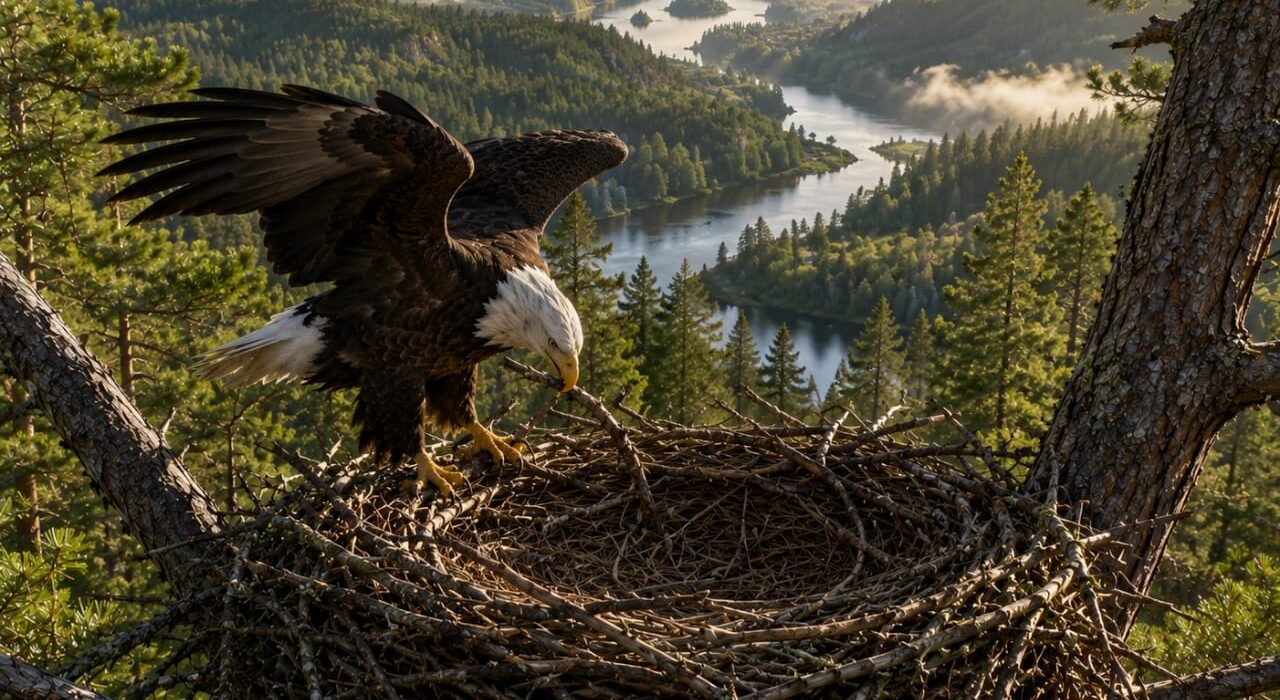
From high above the earth, a bird sees what those on the ground cannot. Perched quietly on the edge of its nest, it watches movements in every direction, distinguishing genuine threats from ordinary commotion. Its elevated position offers perspective rather than panic. In many respects, understanding Nigeria’s political landscape requires such a vantage point, a bird’s nest view.
Nigeria’s political terrain is one of the most intricate on the African continent. It is a web of competing interests, shifting loyalties, regional calculations, ethnic considerations, religious sentiments, economic realities, and personal ambitions. To the casual observer, political events may appear chaotic and unpredictable. Yet, from a higher vantage point, patterns begin to emerge.
Like a carefully woven bird’s nest, Nigeria’s democracy has been constructed with countless strands. Every strand, political parties, traditional institutions, civil society, the judiciary, the legislature, the media, security agencies, and the electorate all contributes to the strength or weakness of the entire structure. When one strand weakens, the stability of the nest is threatened.
A bird builds its nest patiently, knowing that haste only produces fragility. And unfortunately, political actors often seek quick electoral victories instead of also pursuing enduring institutions. Coalitions are hurriedly assembled, alliances are formed overnight, and loyalties are traded with astonishing speed.
The result is a political nest that is constantly shaken by avoidable turbulence. The bird also understands the importance of vigilance. It does not abandon its nest simply because the weather changes. It adapts, protects its young, and waits for the favourable conditions. Nigerian politics similarly demands such resilience. Electoral victories and defeats are temporary, but national development requires consistency beyond election cycles.
One striking feature of Nigerian politics is its constant movement. Defections between political parties have become almost seasonal, making ideological differences increasingly difficult to identify. In many cases, personalities overshadow principles, while political survival often receives greater attention than policy consistency. From the ground, these movements appear confusing, from the bird’s nest, they reveal a persistent struggle for influence and relevance.
The bird does not mistake every rustling leaf for danger. It observes carefully and before taking flight. Our political space could benefit from this restraint. Public discourse is frequently dominated by rumours, sensationalism, and emotional reactions that obscure the real issues confronting governance, economic growth, education, healthcare, and national security to the masses.
Another lesson from the bird’s nest is cooperation. Although many birds compete for food and territory, they remain committed to protecting their nests. Nigeria’s political class must recognize that healthy competition should never undermine the collective responsibility of preserving national unity. Elections should produce winners and losers, not permanent enemies.
The height of the nest also symbolizes objectivity. From above, tribal boundaries disappear, religious differences become less pronounced, and political strongholds blend into one national landscape. What becomes visible is a country whose fortunes remain interconnected. Prosperity in one region strengthens the federation; instability in another ultimately affects everyone.
The electorate equally has a role within this nest. Citizens are not merely the spectators watching political contests unfold. Their votes, civic engagement, and insistence on transparency and accountability determine the quality of leadership that eventually occupies the nation’s institutions. A neglected nest eventually collapses regardless of how skilled the bird may be. Perhaps the greatest lesson lies in the bird itself.
It builds, protects, repairs, and rebuilds whenever storms destroy its work. It does not surrender to despair. Nigeria’s democratic journey has experienced military interruptions, economic challenges, electoral disputes, insecurity, and institutional weaknesses. Yet the nation’s political evolution continues, offering opportunities for renewal and meaningful reforms for the people.
Viewing Nigeria from the bird’s nest encourages citizens to rise above partisan emotions and appreciate the broader picture. Political disagreements are inevitable in every democracy, but they should ultimately advance governance rather than diminish it. The nation’s future depends less on who shouts the loudest and more on who strengthens the institutions that sustain democracy.
As preparations for future elections gather momentum, the bird’s nest reminds every stakeholder that politics should be about safeguarding the common home. Birds do not destroy their nests simply to prove superiority over one another. Likewise, political ambition should never come at the expense of national cohesion, constitutional order, and the welfare of the people.
Only from such a vantage point as that of a bird can the country’s political journey and surrounding complexities be properly understood, its recurring mistakes corrected, and its democratic promise to the masses fully realized.
The Bird’s Nest